

Paper is not paper
Paper is not paper: how to tell a print that lasts from one that fades
You have probably noticed that two prints of the same painting can sit at very different prices. It is easy to assume the dearer one must have better ink or a smarter printer. Most of the time the real difference is invisible to the eye at first glance: it is the paper.
The paper decides how deep the blacks look, how the colours hold, and most importantly how long the print survives on your wall. So when you are choosing art, it helps to know a little about what you are buying. Here is what matters, explained without the jargon.
The paper families
Fine art paper is not one single thing. It is a family of papers with different ingredients, and the ingredients tell the whole story.
Cotton rag. This is the gold standard, and it has been for centuries. It is one hundred percent cotton fibre, soft and matte, and it soaks up ink beautifully, which is why it gives those rich, deep blacks and a proper gallery feel. If you want the safest, most respected fine art paper in the world, this is it.
Etching and mould-made. Also cotton, but made the traditional way, which gives it a visible, textured surface you can feel with your fingers. It looks classical, like a print a museum might frame. People who love that old, painterly character reach for this one.
Bamboo. Bamboo fibre blended with cotton. It is the more environmentally friendly option, with a warm, natural tint and a soft surface. It has its own gentle look, and it is genuinely kinder to the planet.
Alpha cellulose, or fibre. This is clever in a quiet way. It starts as wood pulp, the same thing cheap paper is made from, but the manufacturer refines it thoroughly to strip out the impurities. The impurity that matters is called lignin, and it is the enemy of long-lasting paper. Once it is gone, you are left with an acid-free, archival paper that is more affordable than cotton but still museum rated. We print our fine-art editions on Hahnemühle 210, a premium alpha-cellulose paper from the renowned German paper maker, which gives crisp detail with genuine archival longevity.
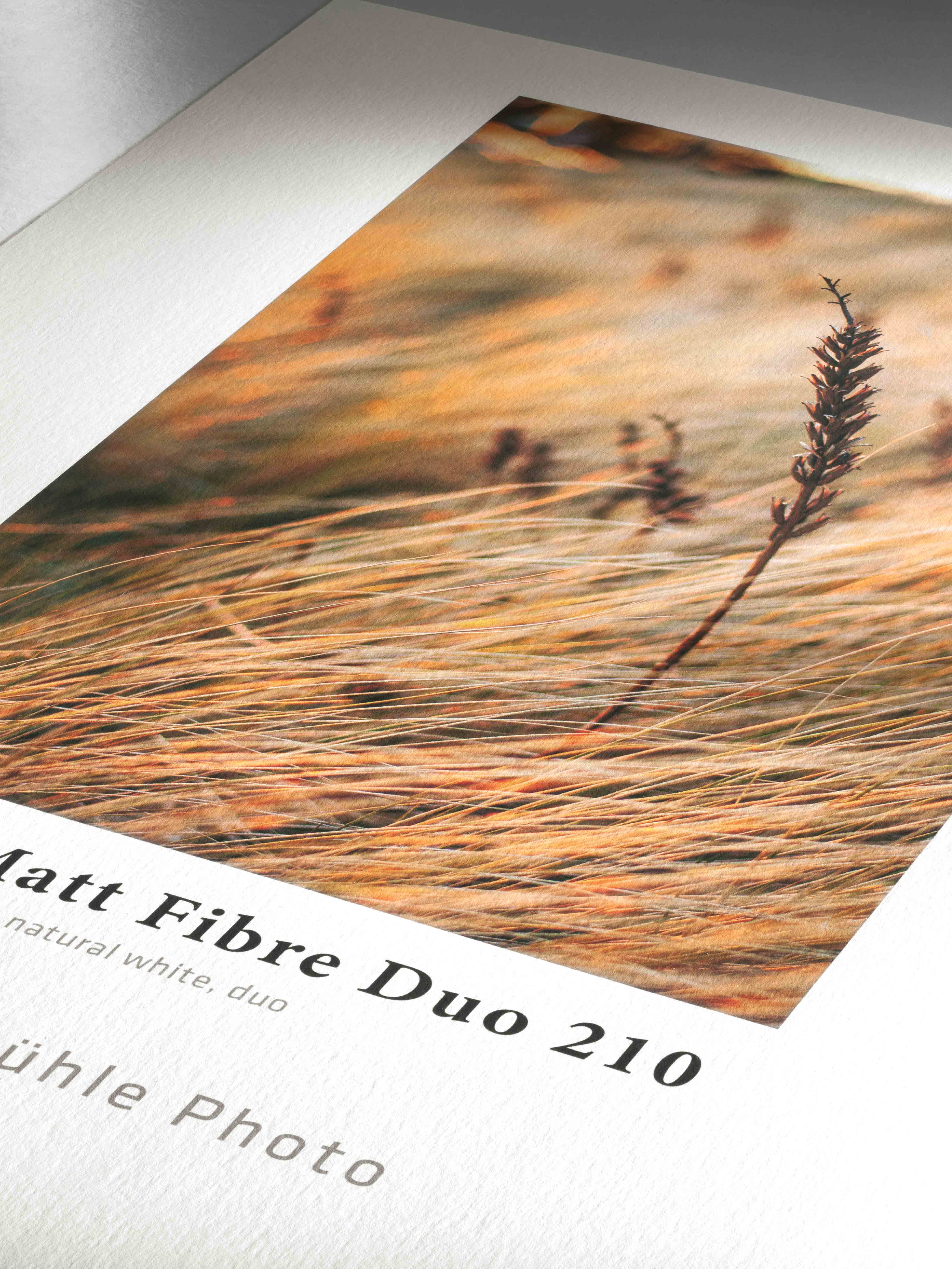
Matte paper. This is our everyday option. It is a smooth, matte-finish paper that reproduces artwork beautifully and keeps the price friendly. What it is not is archival. It has no ISO 9706 certification, so it will not hold its colours for decades the way the fine-art paper does. If you want the look without the lasting guarantee, this is the budget-friendly choice.
The honest hierarchy: cotton simply feels and looks the most luxurious, but a well-refined wood pulp like our Hahnemühle 210 can still last. The two are not the same, though. The softness and richness that make a print feel like a real gallery piece, that is cotton's signature.
The GSM trap
You will see a number on paper, GSM, which is the weight in grams per square metre. It is natural to read a bigger number as better. That is a trap.
A glossy photo paper can weigh more than a fine cotton paper and still be the cheaper option. That is because many glossy papers are resin coated, a paper core wrapped in plastic layers, and the plastic is what makes them heavy. The weight is plastic, not real fibre. Meanwhile a lighter cotton paper is heavier where it counts, in genuine absorbent fibre.
So weight only tells you how thick a paper is within its own family. What actually matters is the chemistry, what the paper is made of. A paper's ingredients decide whether it fades in a few years or stays beautiful for decades. Do not buy weight. Buy quality of material.
What "archival" really means
"Archival" is a word you will see a lot, sometimes used loosely. It has a precise meaning, and it is worth understanding because it is the line between art and decoration.
An archival paper is one that will not damage the print sitting on it over time. Three things make that true.
First, it must be acid free and pH neutral. Paper that is not, slowly bleeds acid, and acid yellows the paper and literally burns the image over the years. This is the single biggest cause of prints going bad, and it happens invisibly.
Second, it must be low in lignin. Lignin is a natural substance in wood pulp that, left in the paper, yellows and degrades it over time. Cheap paper keeps it. Archival paper is refined to remove it.
Third, it should meet a published standard. The one to look for is ISO 9706, a specific, testable certification for long-term durability. When a paper carries it, it is not a slogan, it is a measured guarantee. When a paper does not carry it, "archival" is just a seller using a nice word.
"Museum grade" is a label, not a fact
Here is the sharp edge. "Museum grade" and "museum quality" get stuck on all kinds of things that do not earn the title, because the words are free.
A print is genuinely museum grade only if it meets a real spec: acid free, pH neutral, ISO 9706, and printed with pigment ink. Some products borrow the "museum" label purely because they hit one checkbox, which is technically true but tells you nothing about the real quality.
So the question to ask is not what a seller calls a print, but whether it actually meets the standard.
At Frame Lane we offer two paper tiers, so you can pick what fits the piece and the price. Our standard prints use a smooth matte paper, which looks great and is easy on the budget. Our fine-art prints use Hahnemühle 210, a certified archival paper from one of the world's best paper makers, which is what carries the lasting, museum-grade quality. Same artwork, same care in printing; the difference is the paper and what it promises for the years ahead.
Paper or canvas, what should you choose?
There are two main ways to receive a print: on paper, framed under glass, or on canvas, stretched over a wooden frame and hung as it is.
Canvas arrives ready to hang with no glass, so there is no glare and it is easy to display. It suits modern, relaxed spaces and looks great at larger sizes. It is the everyday favourite for most wall art.
Paper needs glass to protect it, but that glass is what gives a crisp, classic gallery look. People who want a more traditional or collectable piece often prefer paper, because the flat surface shows fine detail and the cotton rag keeps its purity for generations.
The short version: canvas for a clean, modern, fuss-free look. Paper for a timeless, gallery feel. Both are excellent; they just suit different rooms and different tastes.
The quiet difference
None of this is glamorous. Nobody stands in front of a print and thinks "ah yes, alpha cellulose." But the paper is doing silent work the whole time you own the piece. It decides how deep the blacks are, how long the colours last, and whether your print is a passing trend or something you pass down.
A print on cheap, plastic-coated paper can look stunning in the shop and faded on your wall a few years later. A good print on archival cotton rag just sits there, unchanged, for decades. That is the difference between buying art and buying a picture.
When you buy from Frame Lane, the paper is part of the promise. If you want a piece that will look the way you fell for it for years and years, choose our fine-art edition on archival Hahnemühle 210. If you prefer a budget-friendly print that still looks great on the wall, our standard matte paper has you covered. Either way, the artwork is printed with the same care, and the paper is chosen honestly, so you know exactly what you are getting.
From our budget-friendly matte paper to our archival Hahnemühle 210 fine-art editions, every Frame Lane print is made with care. Browse the collection.